

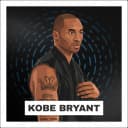
Part IThe Story
The Blowtorch and the Fingers
The pain was so immediately intense that it was as if someone were holding a blowtorch to the back of his head. That was how Kobe Bryant described the moment, in the fourth quarter of a game against the Golden State Warriors on April 12, 2013, when his left Achilles tendon ruptured — the tendon recoiling upward into his calf like a snapped rubber band, the sound audible to teammates on the bench. His first instinct was not to fall. His first instinct was to try yanking the recoiling tendon back down with his fingers. Then he insisted on taking his foul shots. Both of which he made, in spite of precarious balance, tying the game. Then he limped to the locker room, acquiesced to surgery, and vowed to rehab more quickly than anyone believed possible.
The same Achilles injury ended the career of Isiah Thomas. Only Dominique Wilkins recovered from it well enough to remain an All-Star, and Wilkins was two years younger at the time and had pestled his joints for about half as many minutes. Bryant was thirty-four and had logged more N.B.A. minutes, including the post-season, than all active players. The smart money said this was the end. The smart money did not understand who it was dealing with.
Seven months later — not the recommended twelve, not even nine — he was back on the court at the Staples Center, against the Toronto Raptors, the same team he had once lit up for eighty-one points. This time he scored nine and committed eight turnovers. He gave himself an F. Six games after that, he fractured his left knee. The heroic comeback had lasted less than three weeks. And yet what stayed in the minds of everyone who saw it was not the failure but the fingers — the image of a man on a basketball court in Oakland, his Achilles tendon snapped, reaching down to try to fix himself with his bare hands.
This is the gesture that explains everything. Not the championships, not the eighty-one points, not the feuds or the alter ego or the Oscar or the venture capital fund. The fingers. The absolute refusal to accept the verdict of his own body. The insistence that will could override tissue, that obsession could bend physiology to its purposes. It is the gesture of a man who believed, with a conviction that bordered on delusion and occasionally crossed into it, that the rules governing other human beings did not apply to him. For twenty years and 48,637 minutes on an N.B.A. court, he was usually right.
By the Numbers
Kobe Bean Bryant (1978–2020)
5NBA championships (2000–02, 2009–10)
33,643Career points scored (4th all-time at retirement)
81Points vs. Toronto Raptors, January 22, 2006 — modern single-game record
18NBA All-Star selections
20Seasons with the Los Angeles Lakers — entire career
$100MBryant Stibel venture capital fund (launched 2016)
1Academy Award — Best Animated Short Film, Dear Basketball (2018)
The Boy Named After Beef
He was born a brand, named after the Kobe beef at a Japanese steak house in King of Prussia, Pennsylvania. The Philadelphia Inquirer announced his arrival on August 24, 1978, with a misspelling — "Cobie Bean" — which was fitting, because from the beginning people would struggle to categorize this child who seemed to belong to several worlds and none of them entirely.
His father, Joe "Jellybean" Bryant, was a six-foot-nine forward who had played at La Salle University and spent eight seasons in the N.B.A. with the 76ers, the San Diego Clippers, and the Houston Rockets. Jellybean was a playground legend — flashy, creative, a Philadelphia product who developed his game on the asphalt courts of Southwest Philly, where style was a form of argument and a between-the-legs pass meant more than a balanced ledger of assists. He felt underappreciated in the pre-Showtime-era N.B.A., where his creativity was treated as indulgence. Kobe's mother's brother, John Arthur "Chubby" Cox, had played alongside Joe in Philly's famed Sonny Hill Summer Basketball League before his own brief N.B.A. career with the Washington Bullets. Basketball was not a choice in the Bryant family. It was genealogy.
When Kobe was six, the Bryants moved to Italy so Joe could continue playing in the European professional leagues. They settled first in Rieti, a small town in central Italy, and remained abroad for seven years. Kobe remembered hearing Italian fans sing, "You know the player who's better than Magic or Jabbar? It's Joseph, Joseph Bryant!" He attended Italian schools. He read a Latin version of the Iliad. "And do presentations on it, in Latin, at nine years old, know what I mean?" he said later. "That's growing up a little differently."
Cut off from the American Amateur Athletic Union circuit — which was, by the mid-1980s, increasingly geared toward showy feats of athleticism over basketball intelligence — the boy absorbed the European coaching tradition instead. Bill Russell and Jerry West had traveled overseas to run clinics, teaching Italian coaches how to think the game sequentially, how to play fundamentally sound basketball. "I was a by-product of all that," Bryant recalled. "We were doing Red Auerbach's drills" — from the fifties and sixties. "I just came up at the right time and learned to play the right way because of it. So when I came back to America all I had to do now was put the icing on the cake, in terms of the flash and the imaginative things."
He returned to the Philadelphia suburbs at thirteen, a black teenager who spoke Italian, whose cultural coordinates were European classical tradition and N.B.A. legends absorbed secondhand through grainy VHS tapes, and who had to learn, essentially, two new languages to fit in: American English and the distinct vernacular of Black American adolescence. "Kids are cruel," he once said. "It's always been hard."
The Gymnasium at Lower Merion
Before Kobe arrived, Lower Merion High School's basketball program was a punchline. The team's uniforms were mismatched — a No. 41 on a player's tank top, a No. 21 on his shorts. They once lost a game 54–13, finishing with only four players on the court. Then came Gregg Downer, a young coach with ambitions, and shortly after, a gangly freshman whose father had once been the most famous basketball-playing Bryant in Philadelphia.
By his sophomore year, Kobe was averaging 22 points and 10 rebounds per game. By his senior year, games attracted ticket scalpers. Three generations of relatives from both sides of the family — most living within a seven-mile radius — gathered to cheer him on. He broke the southeastern Pennsylvania scoring record set by Wilt Chamberlain, finishing his high school career with 2,883 points. He unified a community that prided itself on diversity but needed a common point of pride. "You had Black kids cheering for Kobe and you had white kids from the soccer team in another part of the stands," recalled teammate Doug Young. "But you also had kids from the theater who never came to watch basketball."
In 1996, in the gymnasium at Lower Merion, with cameras rolling, the seventeen-year-old stroked his chin theatrically, a pair of shades perched above his brow, a thin mustache sprouting above his upper lip. "I've decided to skip college and take my talent to the N.B.A.," he said. Fourteen years before LeBron James would earn infamy for announcing his own migration to South Beach, here was the prototype: a teenager choosing spectacle over humility, choosing himself. A few weeks later, he took the singer Brandy to his senior prom. They arrived in a white stretch limousine at the Bellevue Hotel in Center City Philadelphia. He still needed his parents to co-sign his first N.B.A. contract.
The Workout That Changed Everything
The private workout happened in early June 1996, inside the Inglewood YMCA, witnessed by a handful of people. The videotape recordings have since vanished.
Kobe's agent, Arn Tellem — a shrewd operator who understood that from both a marketing and basketball standpoint there was only one place for his client — had arranged for the Lakers to host the session as a favor. Jerry West, the team's legendary executive whose silhouette is immortalized in the official N.B.A. logo, agreed reluctantly and planned a test: Kobe's on-court opponent would be Michael Cooper, one of the greatest defenders in league history. The idea, it seemed, was comeuppance for a kid who needed his parents to sign his contract.
Ryan West, Jerry's teenage son, picked Kobe up that morning at the Shutters on the Beach resort in Santa Monica. The only thing Bryant carried with him was a basketball — his favorite, tucked under his arm. "It was the funniest thing," Ryan recalled years later, "but it showed the two sides of Kobe. It showed the laser focus and dedication of Kobe but also the childlike nature of Kobe, bringing his favorite toy with him wherever he went."
What unfolded over the next forty-five minutes left those present grasping for words. "Greatest workout I've ever seen," Ryan said. The Charlotte Hornets selected Bryant with the 13th pick of the 1996 draft on June 26. He was traded to the Lakers for Vlade Divac on July 11. When the 1996–97 season opened in November, he was the second-youngest player in N.B.A. history. By February, he had won the slam-dunk contest at All-Star Weekend. By his second season, he was the youngest All-Star the league had ever seen.
The N.B.A. scouting director Marty Blake had told reporters that spring, "He's kidding himself. Sure, he'd like to come out. I'd like to be a movie star, too. He's not ready."
The One-Two Punch That Hated Itself
They were, in Shaquille O'Neal's estimation, "the greatest one-two punch ever — little man, big man — in the history of the game." And they hated one another.
O'Neal arrived in Los Angeles in 1996, the same summer as Bryant, a physical force so overwhelming that his indifference to mastering something as elementary as free throws was rendered maddeningly inconsequential. Opposing teams coined "Hack-a-Shaq" — deliberately fouling O'Neal on the expectation that he wouldn't make his shots. O'Neal was a clown, and beloved for it. He made movies, released rap albums, gave himself nicknames. Bryant, who once told Newsweek that he didn't believe in happiness, remained aloof.
"It used to drive me crazy that he was so lazy," Bryant said. "You got to have the responsibility of working every single day. You can't skate through shit."
The tension was as generative as it was destructive. Under Phil Jackson — the Buddhist, bookish coach who consulted a therapist and at one point recommended that O'Neal read Hermann Hesse's Siddhartha — they won three consecutive championships, in 2000, 2001, and 2002. The three-peat came almost too easily, and the ease bred contempt. Bryant shunned reporters whom he saw talking to O'Neal. O'Neal refused to accept help from the same trainers who taped Bryant's ankles.
Jackson, a man who had coached Michael Jordan through six championships in Chicago, wound up describing Bryant as "uncoachable." "I had a dream about spanking Kobe and giving Shaq a smack," he later wrote. Management, forced to choose between the giant clown and the stubborn mule, chose the mule. O'Neal was shipped to Miami. Jackson was dismissed, at least for a while.
— Kobe BryantI was stubborn as a fucking mule.
The feud's coda arrived in the summer of 2008, when O'Neal — who had won a fourth championship with the Heat in 2006 — appeared onstage at a New York nightclub and free-styled about Bryant's Colorado arrest, about their fractured relationship, and about his own posterior, repeating the zinger "Kobe, how my ass taste?" while the crowd joined in unison. O'Neal's Barkleyesque rump was flaunted. It was petty, it was ugly, and it was the last time Shaquille O'Neal held a clear lead in the rivalry.
The Snake and the Charges
In the summer of 2003, Kobe Bryant was arrested for sexual assault in a Colorado hotel room. The charges were eventually dismissed when the accuser refused to testify, following what Britannica describes as "a monthslong campaign of harassment by fans of Bryant and some members of the media." Bryant later apologized, acknowledging that he realized his accuser did not believe their sexual encounter was consensual. A civil settlement was reached in 2005.
The incident obliterated his public image. Every major sponsor dropped him except Nike. "I'm sitting there thinking, What am I going to do now?" Bryant recalled. "My vision was to build a brand and do all these things. Now everybody's telling me I can't do it. The name just evokes such a negative emotion."
His response was one of the stranger acts of self-creation in modern sports history. He invented an alter ego. After watching Quentin Tarantino's Kill Bill, in which the black mamba — a snake known for its agility and aggressiveness — serves as a code name for a deadly assassin, Bryant read up on the animal and thought: This is a perfect description of how I would want my game to be. The Black Mamba was born. "If I create this alter ego," he reasoned, "so now when I play this is what's coming out of your mouth, it separates the personal stuff, right? You're not watching David Banner — you're watching the Hulk."
It was branding as therapy, narrative as escape hatch. And it worked — not because the public forgot what happened in Colorado, but because Bryant gave them something else to talk about. The alter ego became a mythology, and the mythology became, over time, something more durable than reputation: identity. Mamba Mentality. A phrase that would outlast even Bryant himself.
Eighty-One
On January 22, 2006, against the Toronto Raptors at the Staples Center, Bryant scored eighty-one points.
It remains the second-highest single-game scoring total in N.B.A. history, behind only Wilt Chamberlain's hundred-point game in 1962 — an achievement set before the shot clock era, before zone defenses, before the modern game's sophisticated defensive schemes. By any meaningful measure of difficulty, eighty-one in 2006 may have been harder to accomplish than a hundred in 1962.
This was the sullen period — post-O'Neal, post-Jackson, post-Colorado. The Lakers were mediocre. Opposing teams designated "Kobe stoppers," dedicated shadows whose sole job was to frustrate the team's lone offensive weapon. Bryant had scored fifty or more in four consecutive games earlier that season. He led the league in scoring at 35.4 points per game. He was not sharing. He was proving something — though to whom, exactly, was never entirely clear. Himself, probably. The doubters who said he couldn't win without Shaq. The sponsors who had abandoned him. The fans who looked at him sideways.
"I stayed in the moment," he said later, with a calm that was itself a kind of performance. From 55 to 60 to 70 to 77 — and then eighty-one. The number became its own shorthand, like Chamberlain's 100 or DiMaggio's 56. It required no context, no explanation. Just: eighty-one.
The Catalonian and the Kobe Assist
Redemption arrived in the form of a seven-foot Catalonian with wild hair who preferred opera to rap.
Pau Gasol was traded to the Lakers in February 2008, and the pairing — intuitive where the O'Neal partnership had been combustible — transformed Bryant's game and, ultimately, his legacy. Gasol was an intellectual rather than a rival alpha male. He read Roberto Bolaño's nine-hundred-page novel 2666, a gift from Phil Jackson, who had returned for a second stint as coach. He enjoyed Bryant's cleverness and sarcasm, and appreciated his efforts to speak Spanish with him on the court.
Gasol redeemed Bryant's penchant for excessive shooting through a simple physical gift: rebounding. He gathered misses so effectively that Bryant's chunked fadeaways and contested leaners could almost be considered passes. Thus was born a new statistical category — the "Kobe assist" — meant to credit missed shots that seemed, more than randomly, to beget success. It was the kind of statistical joke that concealed a real insight: Bryant's relentlessness, even in failure, created opportunities.
They won two championships together, in 2009 and 2010, bringing Bryant's ring count to five — one more than O'Neal had earned without him. The 2009 Finals MVP award came with averages of 32.4 points, 5.6 rebounds, and 7.4 assists against Orlando. The 2010 championship arrived in a seven-game series against the Boston Celtics — a rematch of the 2008 Finals, which the Lakers had lost badly enough that Bryant later made his daughter watch the tape so she could see Daddy cry. In Game 7, the most important game of his career, he scored 23 points and grabbed 15 rebounds, barely pushing the Lakers to victory.
— Kobe BryantLast year was the best basketball I've played in my entire career. I've never worked so hard in my life to prepare for a game, in film study, quarterbacking on the floor, putting everybody in the right position, and then having to take care of my body. It was literally no life, because my body was hurting so much. I had to ice-bath, stretch, massage, elevate my legs, stretch, and then go out and play. But the results were irrefutable.
One Hundred Thousand Made, Not Taken
A few years before his peak, Kobe fractured the fourth metacarpal bone in his right hand. He missed the first fifteen games of the season and used the opportunity to learn to shoot jump shots with his left — which he deployed in actual games. While healing, the ring finger, taped to his pinkie, shifted position. His four fingers were no longer evenly spaced; now they were separated, two and two. His touch on the ball changed. His shooting percentage dropped. Studying film, he noticed his shots were rotating slightly to the right.
To correct the flaw, he went to the gym over the summer and made one hundred thousand shots. Not took one hundred thousand shots. Made them. If you are clear on the difference between those two ideas, you can start drawing a bead on Kobe Bryant.
The obsession was comprehensive. He hired Tim Grover, Michael Jordan's former trainer, because he felt his previous program had plateaued. He traveled to Düsseldorf to see Dr. Peter Wehling for experimental Orthokine therapy on his degenerating right knee — treatments not F.D.A.-approved, involving a centrifuge that isolated an antagonist of an arthritic agent called interleukin. The referral had come, improbably, through Laker fans in Hollywood: Karen Silver, wife of the producer Joel Silver, and Ari Emanuel of Endeavor. Bryant made the trip each of three consecutive off-seasons. His right knee — his "cyborg knee," as it came to be known — had hardly any cartilage left, but the response was tremendous. He referred Alex Rodriguez to Wehling. Peyton Manning sought similar European treatments for his neck.
Gary Vitti, the Lakers' head trainer for decades, described Bryant's approach with something between admiration and bewilderment: "With Kobe, there's always 'why.' So if I say, or if anybody says, 'We're going to do this,' then the question is, 'Why?,' and you have to explain it to him, not only in an anatomical but in a kinesiological way." While the rest of the Lakers had gone low-carb, eating only grass-fed beef — no "wannabe cows," as center Robert Sacre put it — Bryant, unsatisfied with the locker-room spread of kale chips and almond-butter paste, had hired a nutritionist from the U.S. Olympic Committee to monitor his levels more closely.
He committed to a restorative diet of bone soup after the Achilles tear. He flew by helicopter to games to spare his joints the two-hour car ride from Orange County. The helicopter was not luxury; it was infrastructure. "If you make $23 million a year with your body," one profile noted, "taking a helicopter to work is actually quite practical."
The Ugliness of Greatness
In January 2014, Seattle Seahawks cornerback Richard Sherman delivered his infamous victory rant to Fox's Erin Andrews after a playoff win. The reaction was fierce — white commentators reached, with questionable frequency, for the word "thug." Bryant watched from the sideline of his own injury-shortened season and felt a surge of recognition.
"What you saw in Richard Sherman was the truth of athletes at the highest, highest, highest level," he said. He compared it to Michael Jordan's 2009 Hall of Fame induction speech — a sad, drawn-out spectacle of score-settling and false humility that made everyone uncomfortable. "It made everybody uncomfortable, but that's him, right? So when you see Sherman kind of just let it out, that's been inside him from Day One. This is why he's the best at what he does, because that's how he feels."
He paused. "That was the ugliness of greatness. That's what that is to me."
The phrase illuminated something Bryant understood intuitively and spent his career demonstrating: that the drive required to dominate a field is not pretty, is not kind, is not compatible with the desire to be liked. It curdles relationships. It alienates teammates. It produces behavior that looks, from the outside, indistinguishable from cruelty.
Nick Young, a teammate during the late years, captured the paradox with blunt precision: "Everybody says he's an asshole and all that. He is. But he's — he's a good one, for some reason, you know? And he don't mind being called that!" Bryant's own characterization: "I grew up with role models that were assholes. I mean, you know, in a very competitive, fun way. But they were assholes! You know Michael, his tongue was sharp as a whip. Bird? Sharp, and I mean, like, personal. They were nasty. Barkley was nasty. I grew up around these guys, so when I talk trash to somebody I'm going for the jugular. These younger generations, it freaks 'em out a little bit."
He played Candyland with his daughter Gianna when she was three. She could see he could win. He won. "And the kid goes ape shit. She knocked the board over. 'Baaaaaaa!' I was, like, 'Shit, the kid's like me. Damn it.' " He was both horrified and proud. "It's a rough way to be," he admitted. "Because all you care about is that end result and winning."
The Fourth Quarter
In late November 2015, Kobe Bryant published a poem on The Players' Tribune titled "Dear Basketball." It began:
From the moment / I started rolling my dad's tube socks / And shooting imaginary / Game-winning shots / In the Great Western Forum / I knew one thing was real: / I fell in love with you.
The poem announced his retirement. His body, he wrote, knew it was time to say goodbye.
The final season was a farewell tour he claimed not to want but participated in with evident relish. His shooting percentage — .358 — was a career low. He averaged 17.6 points per game, the fewest since his rookie year. It did not matter. On April 13, 2016, in the final game of his career against the Utah Jazz, he scored sixty points. In the last two minutes, he scored thirteen consecutive, rallying the Lakers to victory. A frenzied Staples Center chanted his name.
"Man, I can't believe how fast twenty years went by," he said at center court afterward. "This is crazy. This is absolutely crazy." He thanked the fans, his family, his wife Vanessa. He acknowledged both the championships and the down years — "we did it the right way." And then, with the economy of someone who had spent a lifetime crafting his brand: "What can I say, Mamba out."
Granity and the Second Mountain
The retirement had been planned with the same meticulous obsession he brought to film study. Years before his final game, Bryant had begun attending university classes on road trips. While the Lakers visited Boston, he sat in on lectures in international marketing and banking at Boston College. At the University of Miami, he joined a marketing-management class reviewing a case study on the Ford Fiesta. Students posted pictures of Bryant wearing a backpack.
"I'm seeing the language of things that I've been doing for years," he said of his sneaker line.
The second career took multiple forms. In 2013, he and Jeff Stibel — a brain scientist and tech entrepreneur introduced through a mutual friend — began investing together. By 2016, they had formalized the relationship into Bryant Stibel, a $100 million venture capital fund focused on tech, media, and data companies, funded primarily with Bryant's own money. Their portfolio included The Players' Tribune, LegalZoom, and the sports drink company BodyArmor, in which Bryant invested $6 million in 2014. Chris Sacca, the billionaire investor, said of Bryant's approach to the startup scene: "He was obsessive with the research. I don't think he's a pretender about that stuff. I think he can be great at this."
Bryant also founded Granity Studios — the name a word he coined by blending "greater than infinity" — a multimedia content company focused on creating stories around sports. Its first major production was an animated short film based on "Dear Basketball," narrated by Bryant and directed by Disney legend Glen Keane. It won the Academy Award for Best Animated Short Film in 2018. The five-time N.B.A. champion was now an Oscar winner.
He published The Mamba Mentality: How I Play that same year, a lavish book pairing his basketball insights with photographs by Andrew D. Bernstein. Phil Jackson wrote the introduction. Pau Gasol wrote the foreword. He produced The Wizenard Series with author Wesley King — children's fantasy novels about a mysterious basketball coach whose magical methods reveal how greatness lies within. He was working on a children's book with Paulo Coelho, the author of The Alchemist, a novel Bryant had read so many times he recommended it to other N.B.A. players.
"Giorgio Armani didn't start Armani until he was forty," Bryant told a reporter in 2014. "Forty! There's such a life ahead."
He was forty-one when the helicopter went down.
January 26, 2020
The helicopter — a Sikorsky S-76B — crashed into a hillside in Calabasas, California, on a foggy Sunday morning. Kobe Bryant and his thirteen-year-old daughter Gianna were among the nine people killed. They were traveling to a girls' basketball game at the Mamba Sports Academy, a training facility Bryant had opened in Thousand Oaks.
Gianna was his shadow. She was the one he described as "insanely, insanely competitive — like, mean." The one who knocked the Candyland board over at three. The one who traveled to work with him, who asked hyper-specific questions about defensive angles during heated games. "What I love about Gigi is her curiosity about the game," he had told a reporter three months before the crash. "Even in a heated situation in a game where it's going back and forth, she can detach herself and come to me and ask a very specific question, which is not common."
He was elected to the Naismith Memorial Basketball Hall of Fame later that year.
In his last extended interview, conducted at his Costa Mesa office on October 21, 2019, Bryant explained to the Los Angeles Times' Arash Markazi why he rarely attended Lakers games anymore. The reporter had asked why he stayed away from the Staples Center.
"I have my routine at home," Bryant said, and smiled. "It's not that I don't want to go, but I'd rather be giving B.B. a shower and sing Barney songs to her. I played 20 years and I missed those moments before. For me to make the trip up to Staples Center, that means I'm missing an opportunity to spend another night with my kids when I know how fast it goes. I want to make sure the days that I'm away from them are days that I absolutely have to be. I'd rather be with them than doing anything else."
He had a helicopter to catch.
Part IIThe Playbook
Kobe Bryant's twenty-year career and rapid post-basketball ascent yield a playbook that is, like the man himself, often contradictory — built on obsessive self-improvement and deliberate isolation, on branding as identity construction and mentorship through intimidation. The principles below are drawn from the evidence of his decisions, not the polish of his motivational slogans. Many are uncomfortable. Some are cautionary. All of them worked.
The principles
- 1.Use isolation as competitive advantage.
- 2.Study the craft, not the scoreboard.
- 3.Construct an alter ego to survive crisis.
- 4.Seek mentors who refuse to flatter you.
- 5.Treat your body as an engineering problem.
- 6.Ask "why" until the answer is anatomical.
- 7.Let the volume game generate its own logic.
- 8.Build your brand as narrative, not endorsement.
- 9.Make the transition before the transition is forced.
- 10.Lead through standards, not through friendship.
- 11.Invest, don't give.
- 12.Know when Mamba out means Mamba out.
Principle 1
Use isolation as competitive advantage
Bryant's childhood in Rieti, cut off from American basketball culture, could have been a liability. Instead, it became the foundation of his entire game. While his future peers were running AAU circuits that rewarded athleticism and showmanship, Bryant was absorbing European coaching traditions rooted in the sequential thinking of Red Auerbach and the fundamental drills of Jerry West and Bill Russell. "I wasn't the strongest kid at that camp," he said of his first ABCD camp in 1994. "I wasn't the fastest. I wasn't the most athletic. I was probably the most skillful."
The social isolation — the black teenager speaking Italian, reassimilating in suburban Philadelphia — gave him a sense of permanent outsider status that he channeled into work. The loneliness became fuel. He never lost the feeling that he was "not supposed to be here," and that feeling, paradoxically, made him unstoppable.
Tactic: Identify the formative disadvantage in your own background and ask whether, reframed, it is actually an asymmetric skill that your competitors — raised conventionally — cannot replicate.
Principle 2
Study the craft, not the scoreboard
After a hand fracture changed the spacing of his fingers and altered his shooting touch, Bryant didn't accept the diminished percentage. He went to the gym and made one hundred thousand shots — not took, made. When he noticed, from film study, that his shots were rotating slightly to the right, he diagnosed the mechanical problem with the precision of an engineer, not the intuition of an athlete.
His film study was legendary within the sport — hours of tape on every opponent, every defensive scheme, every tendency. He studied Allen Iverson exhaustively after getting beaten by him. He studied Michael Jordan by watching not highlights but full-game footage, identifying micro-patterns in defensive rotations. "I've always been more interested in the creative side of the game, like how things happen, why things happen, as opposed to just the numbers," he said. "Numbers have never felt fun to me."
This was not anti-analytical. It was meta-analytical — he wanted to understand the system behind the numbers, the generative logic that statistics could only describe after the fact.
Tactic: When your performance drops, resist the temptation to work harder at the same thing; instead, zoom into the mechanism and identify the specific micro-failure — then fix that one thing, ten thousand times.
Principle 3
Construct an alter ego to survive crisis
The Black Mamba was not a marketing gimmick. It was a psychological survival strategy invented in the aftermath of the Colorado sexual assault charges, when every major sponsor except Nike dropped Bryant and his name "evoked such a negative emotion" that his vision for a post-basketball brand seemed impossible.
The alter ego created a psychological partition — a firewall between the person and the performer. "If I create this alter ego, so now when I play this is what's coming out of your mouth, it separates the personal stuff, right?" The genius was that the alter ego eventually consumed the controversy; people stopped talking about David Banner because they were too busy watching the Hulk.
🐍
The Black Mamba: Alter Ego Architecture
How Bryant used narrative construction to survive reputational crisis
| Problem | Mamba Solution |
|---|---|
| Name triggers negative association | Give the public a different name to use |
| Personal life under scrutiny | Redirect scrutiny toward on-court persona |
| Sponsors fleeing | Build a brand identity independent of endorsements |
| Emotional vulnerability | Channel pain into an archetype of aggression |
Tactic: In a professional crisis, don't try to rehabilitate the damaged narrative; build a new one that renders the old one irrelevant.
Principle 4
Seek mentors who refuse to flatter you
Phil Jackson described Bryant, early in their relationship, as "uncoachable." He published criticisms of Bryant's maturity, his anger, his demanding behavior around airplane selection. Bryant once threatened to sue Jackson for slander. And yet Bryant also said: "He's just the best coach to have ever coached any profession, in any era."
The relationship worked precisely because Jackson refused to accommodate Bryant's ego. Jackson gave Bryant books — The Tao of Leadership, Malcolm Gladwell's Blink — not as flattery but as challenges. "He's impacted my life beyond measure," Bryant said, "not just as a basketball player but also as a person, how I am with my family, how I am with my kids: patience, compassion."
The mentor-mule dynamic is uncomfortable by design. It is not a friendship. It is a crucible. Bryant sought the same friction in other domains — traveling to Düsseldorf for unapproved medical treatments, hiring Michael Jordan's trainer because he felt his prior program had plateaued, meeting with Bill Clinton to discuss delegation and organizational structure.
Tactic: Choose advisors and mentors who make you uncomfortable rather than validated — the ones willing to tell you what you're doing wrong, not the ones who confirm what you already believe.
Principle 5
Treat your body as an engineering problem
Bryant's approach to physical maintenance was not wellness culture. It was systems engineering. The experimental stem-cell therapy in Düsseldorf. The helicopter commute to reduce joint stress. The bone-soup diet post-Achilles. The U.S. Olympic Committee nutritionist hired because the team's kale chips weren't cutting it. The abandoned habit of following through with both index and middle fingers — adapted after a hand fracture with apparently zero loss of accuracy.
2003
Begins traveling to Germany for experimental Orthokine therapy on degenerating right knee
2009
Plays through fractured right index finger with splint, adjusts shooting mechanics mid-season
2013
Ruptures Achilles tendon; makes both free throws; begins bone-soup rehab protocol
2013
Returns to play in 7 months — against medical recommendation of 12
2015
Tears rotator cuff; accepts end of competitive viability
Gary Vitti, who saw every kind of athlete over his decades as Lakers trainer, said Bryant was "totally involved in his approach to basketball, whether it be the medical aspect or the athletic aspect or the actual, fundamental aspect. Those three different entities, he's as well versed as any player, I think, that's played any game, ever."
Tactic: Don't delegate your physical (or operational) infrastructure to specialists without understanding the mechanism yourself — ask questions until you can explain the answer in kinesiological terms.
Principle 6
Ask 'why' until the answer is anatomical
"With Kobe, there's always 'why,'" Vitti said. "So if I say, or if anybody says, 'We're going to do this,' then the question is, 'Why?,' and you have to explain it to him, not only in an anatomical but in a kinesiological way."
This relentless interrogation extended beyond medicine to film study, to sneaker design, to marketing strategy. When Nike creative director Eric Avar presented shoe concepts, Bryant pushed back with granular feedback rooted in biomechanics — how a millimeter change in the heel counter affected lateral movement, how the weight distribution of a high-top versus a low-top altered his first step. The Kobe sneaker line was not celebrity licensing. It was co-engineering.
The same disposition surfaced when Bryant studied opponents. He didn't just watch what they did; he wanted to know why they did it — what defensive scheme created the opening, what tendency the player had under pressure, what the sequencing was that generated a particular outcome.
Tactic: Never accept a recommendation without understanding the causal mechanism behind it; the question "why" is not skepticism — it is ownership.
Principle 7
Let the volume game generate its own logic
The "Kobe assist" — a missed shot that reliably begets a rebound and subsequent score — was coined as a joke, but it described a real phenomenon. Bryant's willingness to take difficult, contested shots at high volume was not mere selfishness. It was a strategy that forced defensive rotations, created offensive rebounding opportunities, and demoralized opponents through sheer relentlessness.
His critics, armed with the statistical revolution that swept into the N.B.A. in the late 2000s, pointed out that twenty-foot jumpers were a low-percentage gamble by definition. Bryant was unmoved. "I've always been more interested in the creative side of the game," he said, "as opposed to just the numbers."
The volume principle applied beyond basketball. His content output at Granity Studios was prolific — books, podcasts, animated shorts, documentary projects. His venture portfolio was broad. His reading list was, by his own description, "a mile long." The approach was to take enough high-conviction shots that the misses generated their own downstream value.
Tactic: In domains where learning-by-doing compounds, prioritize shot volume over shot selection — but study every miss to understand why it missed.
Principle 8
Build your brand as narrative, not endorsement
Bryant was born a brand — named after beef on a restaurant menu — but the brand he constructed was something far more sophisticated than endorsements and sponsorship deals. It was narrative architecture: the Mamba persona, the hashtags (#differentanimalSamebeast, #Vino), the carefully managed media appearances, the retirement poem published on The Players' Tribune, the Oscar-winning animated short based on that poem.
"I enjoy crafting the story of things and products," he said. "I just have a passion for it, for marketing and all that stuff." When he discussed Richard Sherman's viral rant, he immediately reframed it as a marketing case study: "What Sherman represents is something bigger than a kid from Compton that went to Stanford, that's an All-Pro cornerback." He could see the Nike commercial unspooling from his own mouth.
His fanatical control extended to suing his own mother to prevent her from auctioning high-school memorabilia. The brand was not something he attached to his career. The brand was the career — the story told about the story.
Tactic: Don't license your name; author your narrative — control the story arc, the imagery, and the platforms, because the story becomes the most durable asset.
Principle 9
Make the transition before the transition is forced
Bryant began preparing for his post-basketball career years before retirement. He attended college classes on road trips while his teammates played cards. He studied marketing case studies at Boston College and the University of Miami. He met with presidents, serial entrepreneurs, and tech founders — Mike Repole (Vitaminwater), Michael Rubin (Kynetic), Evan Williams (Twitter) — absorbing operational knowledge with the same hunger he brought to game film.
"The challenge also has to shift to doing something that a majority of people think that us athletes can't do," he said in 2014, "which is retire and be great at something else."
By the time he retired in April 2016, Bryant Stibel was already three years into its investing relationship. Granity Studios was in development. The infrastructure for the second career was built while the first career was still generating attention and access. Michael Jordan, by comparison, was staying up late watching Westerns he'd already seen.
Tactic: Begin building the next identity while the current one still commands attention and resources — the transition should be invisible until it's irreversible.
Principle 10
Lead through standards, not through friendship
"Everybody focusses on being friends on the court," Bryant told Nick Young. "On the court you ain't supposed to be nobody's friend." He told the Los Angeles Daily News that it bothered him to see players start dealing cards on the team plane without first doing their film-study "homework." When asked if he was tempted to join the card game, he replied: "It's not good for team dynamics. I can't be barking at 'em all day on the practice court and then demolish 'em at a card game, and talk shit to 'em in a card game, too."
The approach was effective and costly. It inspired some teammates and drove others away. Dwight Howard signed with the Houston Rockets in 2013 after clashing repeatedly with Bryant. (Bryant's response: unfollowing Howard on Twitter. "Some people think that's petty, but, whatever, that's how I am.") Mitch Kupchak, the Lakers' general manager, compared him to Ted Williams: "It's like Ted Williams trying to help a guy in the minor leagues. There's just no connect."
Yet Jeanie Buss, the Lakers' president, observed the downstream effect: "When you have a star player who is the first to arrive and the last to leave the gym, it sets the bar for everyone else." Bryant understood — and eventually articulated — the difference between demanding and mentoring. "As a leader of the team, your job is to elevate the other guy, to get them to emotionally want to be better. During practice, it was important to know each one personally, to know what button to push to get them to practice harder."
Tactic: Set the standard through your own behavior first, then hold others to it — and accept that the resulting friction is not a bug but the mechanism through which the standard becomes culture.
Principle 11
Invest, don't give
In a letter to his younger self published on The Players' Tribune, Bryant addressed the single financial mistake that haunted him most: giving money to family and friends rather than investing in their independence.
"Purely giving material things to your siblings and friends may appear to be the right decision," he wrote. "But the day will come when you realize that as much as you believed you were doing the right thing, you were actually holding them back. You were taking care of them because it made YOU feel good. While you were feeling satisfied with yourself, you were slowly eating away at their own dreams and ambitions."
The letter was remarkable for its bluntness. It named the dynamic — generosity as control, charity as ego — that destroys the finances and relationships of countless professional athletes. His prescription: "Use your success, wealth and influence to put them in the best position to realize their own dreams. Put them through school, set them up with job interviews and help them become leaders in their own right."
Tactic: When you have resources to share, structure the transfer to build capability rather than dependency — fund education, create access, and hold recipients to the same standard you hold yourself.
Principle 12
Know when Mamba out means Mamba out
Bryant resisted the farewell tour even as he participated in it. "He just wants to play for something," Phil Jackson said. "He doesn't want a farewell tour for Kobe Bryant." The sixty-point final game against Utah was not sentimentality; it was one last night of proving that the rules didn't apply. Then the microphone, the center-court speech, the four words — "What can I say, Mamba out" — and it was done. No lingering. No coming back.
The discipline of the ending mirrored the discipline of the career. He had signed a two-year extension in 2013 that he described as "fairly certain" to be his last. "Twenty years is a long time, man." He planned the transition, staffed the next venture, built the content pipeline, and when the body gave its final answer, he accepted it — the same man who had tried to yank his ruptured Achilles back into place with his fingers.
The difference was knowing which battles are won by refusing to quit and which are won by quitting at exactly the right moment.
Tactic: Design your exit with the same obsessive attention you bring to your peak performance — the last impression is the one that becomes mythology.

Free playbook
Get The Business Model Playbook
58 business models, one visual page each: how the money flows, the metrics that matter, and who runs it. Free when you join the Faster Than Normal email.
Free. No spam. Unsubscribe anytime.
Part IIIMaxims
-
Isolation is an edge, not a sentence. Being outside the mainstream — culturally, geographically, professionally — creates asymmetric skills that conventional competitors cannot replicate.
-
Make shots, don't take them. The distinction between practice and performance is the difference between accumulating repetitions and accumulating mastery.
-
Build the firewall between person and performer. An alter ego is not vanity; it is psychological architecture that protects the self from the demands of public performance.
-
The mentor's job is to be unbearable. If the relationship is comfortable, it's friendship, not development. Seek the coach who makes you want to sue them.
-
Your body is a system; understand its engineering. Don't outsource the understanding of your own physical or operational infrastructure — own the mechanism.
-
Volume generates its own downstream logic. In domains where learning compounds, prolific output — even when imperfect — creates opportunities that precision alone cannot.
-
Narrative outlasts endorsement. Control the story, not just the brand placement; the mythology becomes the most durable asset.
-
Begin the next career while the current one still has gravity. Transition is invisible when it starts at the peak, catastrophic when it starts at the decline.
-
Generosity without accountability is ego. Structure your giving to build independence, not dependency.
-
The exit is the last story you tell. Plan the ending with the same obsession you bring to the performance — because the ending is what becomes legend.
In Their Own Words
Dedication makes dreams come true.
You are responsible for how people remember you.
Have a good time. Enjoy life. Life is too short to get bogged down and be discouraged. You have to keep moving. You have to keep going.
I see the beauty in getting up in the morning and being in pain because I know all the hard work that it took to get to this point. So, I'm not sad about [retiring]. I'm very appreciative of what I've had.
The story continues. If you fail on Monday, the only way it's a failure is if you decide to not progress from that. To me, that's why failure is not existent.
When we are saying this cannot be accomplished, this cannot be done, then we are short-changing ourselves. My brain, it cannot process failure.
A lot of people say they want to be great, but they're not willing to make the sacrifices necessary to achieve greatness.
Everything negative—pressure, challenges—is all an opportunity for me to rise.
The mindset isn't about seeking a result—it's more about the process of getting to that result.
I have self-doubt. I have insecurity. I have fear of failure. I have nights when I show up at the arena and I'm like, 'My back hurts, my feet hurt, my knees hurt. I don't have it. I just want to chill.
If you're afraid to fail, then you're probably going to fail.
Make today your masterpiece.
There's a contingent of people that say, 'Father Time is undefeated. You won't be able to do it. Blah blah blah.' So part of me is saying, 'Well, I know where your threshold is. So if this had happened to you, you'd probably quit, right?'— Kobe Bryant
That was the ugliness of greatness. That's what that is to me.— Kobe Bryant, on Richard Sherman's viral rant
Their competitive level on the floor is very similar, but, off the floor, I don't think Kobe really has the same issues. I doubt if you'll see Kobe piling up debts on the golf course.— Phil Jackson, comparing Bryant and Jordan
Invest in their future, don't just give. Use your success, wealth and influence to put them in the best position to realize their own dreams and find their true purpose.— Kobe Bryant, letter to his younger self
What can I say, Mamba out.— Kobe Bryant, final game speech, April 13, 2016
Further reading
- Winning: The Unforgiving Race to Greatness by Tim S. Grover


