

How To Be More Charismatic
Charisma operates as both currency and catalyst in high-stakes environments. Martin Luther King Jr., Steve Jobs, Nelson Mandela, Winston Churchill, John F. Kennedy, and Mahatma Gandhi wielded it to reshape industries and societies. Yet the mechanics of magnetic appeal remain poorly understood by those who could benefit most from mastering them.
The prevailing mythology treats charisma as innate — a gift bestowed at birth that separates natural leaders from everyone else. Harvard researchers demolished this assumption. Charisma is a learnable skill set, composed of specific tactics that anyone can deploy to become more influential. The implications are immediate: every founder, every executive, every professional operating in competitive environments can develop the gravitational pull that makes others want to follow.
The Anatomy of Magnetic Appeal
Charismatic individuals share identifiable characteristics that transcend personality types and cultural backgrounds. They are charming without being superficial, compelling without being manipulative, confident without being arrogant, and admirable without being distant. More fundamentally, they understand what they want and possess the ability to make others want it too.
Research confirms what practitioners have long suspected: charismatic leaders significantly outperform their non-charismatic counterparts. Leaders who tap into the emotional needs of their teams generate more positive sentiment, higher engagement, and stronger performance outcomes. The mechanism is straightforward — charismatic communication creates emotional resonance, which drives behavioral change more effectively than purely rational arguments.
This dynamic extends far beyond formal leadership roles. Charisma's core components — charm, confidence, and admirability — create advantages in negotiations, client relationships, fundraising conversations, and team dynamics. The founder who can magnetize talent, the executive who can rally stakeholders during crisis, the professional who can influence lateral peers — all are deploying charismatic principles whether they recognize it or not.
Eight Mechanisms for Developing Presence
Dress as Signal and System
Clothing functions as both external signal and internal trigger. When you dress in a way that makes you feel authoritative, your confidence increases measurably. This confidence radiates outward, creating a feedback loop where others respond to your elevated presence, which reinforces your internal state.
The tactical approach: dress one level above the room's baseline. If the environment is casual, go smart casual. If it's business casual, lean formal. The goal isn't to overdress but to position yourself as someone who takes the interaction seriously enough to make an effort.
Language as Leverage
Charismatic speakers deploy specific linguistic patterns that make their messages more memorable and persuasive. The connect, compare, and contrast method uses metaphors and analogies to make abstract concepts concrete. Martin Luther King Jr. didn't simply advocate for equality — he painted a vision of America as a promissory note that had come back marked "insufficient funds" for African Americans.
Stories and anecdotes transform mundane messages into engaging narratives. The human brain processes stories differently than pure information, creating emotional connections that facts alone cannot achieve. Deploy personal anecdotes strategically to illustrate broader points, but ensure they serve the message rather than showcasing your experiences.
Body Language as Broadcasting System
Charismatic presence begins with physical positioning. Stand, walk, and sit with a straight spine. Maintain eye contact to signal focus and confidence. Avoid shifting weight from side to side, which broadcasts nervous energy. Keep your head positioned directly above your neck rather than hunching forward.
Use your hands deliberately when explaining concepts — gesture helps both speaker and listener process complex ideas. Smile warmly when appropriate, but ensure it reaches your eyes. These elements combine to create an impression of someone comfortable in their own skin and worthy of attention.
Attention as Currency
Full presence during conversations creates profound impact. When you give someone your complete attention — maintaining eye contact, mirroring their body language, asking clarifying questions — you make them feel heard and understood. This builds the foundation for influence.
Charismatic individuals easily read the needs and motivations of others because they're fully engaged in the interaction rather than planning their next statement. They address every question posed to them directly, creating a sense of respect and competence.
Gratitude as Connection Point
Warmth correlates strongly with trust and security. Express genuine gratitude for both large and small actions — thank the barista handling your coffee order with the same sincerity you'd show a major client. Tailor your appreciation to the individual and context.
Gracious behavior signals emotional intelligence and creates positive associations with your presence. People remember how you make them feel, and consistent gratitude creates a pattern of positive interactions.
Relationships as Foundation
Well-connected individuals appear more charismatic because they demonstrate social proof and confidence simultaneously. Maintain your network by checking on friends and acquaintances regularly. Ask about their situations before sharing your own updates.
Don't miss opportunities to create new connections. The person who can bridge different groups and facilitate introductions becomes a valuable node in multiple networks, enhancing their perceived influence and accessibility.
Humility as Strength
Likability remains paramount to charismatic appeal. Even when you know the answer to a question, constantly demonstrating superior knowledge alienates others. Answer questions when asked directly, but allow others to contribute in group settings.
Admit when you don't know something rather than fabricating responses. Intellectual honesty builds credibility over time, while false expertise destroys trust when exposed.
Emotional Intelligence as Radar
Charismatic individuals read facial expressions and body language continuously during conversations. They notice when eyebrows furrow, nostrils flare, or posture shifts, then address what they observe directly.
This real-time emotional awareness allows them to adjust their approach, address concerns before they escalate, and demonstrate genuine care for others' comfort and understanding.
The HAIL Framework: Principles for Authentic Communication
Julian Treasure's HAIL framework provides a systematic approach to developing charismatic communication:
Honesty means being clear, straightforward, and truthful in all interactions. Charismatic individuals don't manipulate through deception — they influence through authentic conviction.
Authenticity requires staying true to your values, background, and beliefs while adapting your communication style to different contexts. You can adjust your approach without compromising your core identity.
Integrity demands consistency between your words, actions, and principles over time. Charismatic influence depends on predictable character that others can trust.
Love translates to showing genuine appreciation, respect, and care for others. This doesn't require personal affection but does demand treating others as valuable individuals worthy of consideration.
These principles work in conjunction with tactical techniques to create sustainable charismatic presence. Focus on cultivating authentic relationships first — charisma follows naturally when you genuinely care about others' success and well-being.
Strategic Vulnerability
Sharing personal information strategically creates connection through vulnerability. Authentically expressing your intentions establishes credibility by revealing character. Small anecdotes and stories make you more relatable, but ensure they serve the conversation rather than centering attention on yourself.
Don't hesitate to share failure stories alongside successes. Perfect people are intimidating; imperfect people who learn from mistakes are inspiring. Others feel more comfortable and trusting around someone who acknowledges their humanity.
Share personal information sparingly and meaningfully, always ensuring it's appropriate to the context and serves a purpose beyond self-disclosure.
Charismatic presence isn't mystical or innate — it's a systematic application of specific principles that make others feel heard, understood, and valued. Master these elements, and you'll find yourself naturally drawing people toward your vision and ideas. The question isn't whether you have charisma. The question is whether you'll develop it.
Free playbook
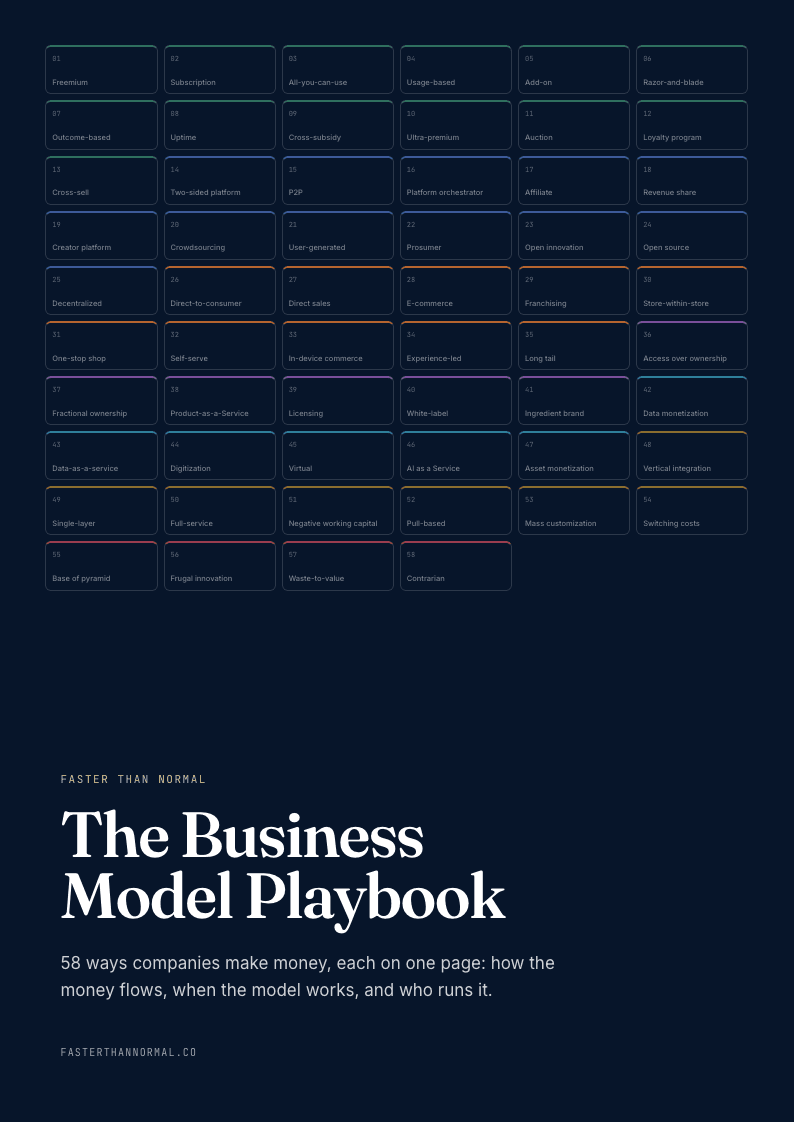
Get The Business Model Playbook
58 business models, one visual page each: how the money flows, the metrics that matter, and who runs it. Free when you join the Faster Than Normal email.
Free. No spam. Unsubscribe anytime.